

DOE: Optimizing a waste-to-fuel future for aviation

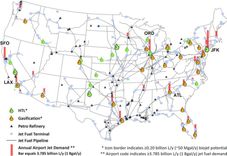

Researchers show that the United States produces enough waste to create an economically viable amount of sustainable aviation fuel. Image from The Pixelman | Pixabay.
October 3, 2024
BY Karthikeyan K. Ramasamy, Laboratory Relationship Manager, Pacific Northwest National
Advertisement
Advertisement
Related Stories

Velocys on July 14 announced the first stage of a product roadmap designed to extend superior microchannel reactor performance to larger, more cost-competitive sustainable aviation fuel (SAF) projects.

The U.K. Department for Transport on July 13 published a document that sets out the agency’s planned approach to allocating contracts under the government’s upcoming sustainable aviation fuel (SAF) revenue certainty mechanism.
The North American SAF Conference & Expo has expanded its agenda with the addition of a new Tuesday afternoon General Session featuring many of the industry's most influential leaders and organizations.
XCF Global Inc., an emerging U.S.-based producer of renewable diesel and sustainable aviation fuel (SAF), on July 9 announced that its New Rise Renewables Reno facility has begun producing renewable fuels.

Montana Renewables LLC collaborated with Gulfstream Aerospace Corp. and its partners as the exclusive fuel supplier for recent low emissions testing on the Gulfstream G800 aircraft. MRL provided MaxSAF to fuel the aircraft.
Upcoming Events

@ Copyright 2026 - BBI International - All rights reserved.