

2026 International Fuel Ethanol Workshop & Expo showcases innovation, insight and industry momentum

By BBI International
June 16, 2026
The 2026 International Fuel Ethanol Workshop & Expo (FEW) concluded after three days of education, networking and collaboration that highlighted the ethanol industry's continued commitment to expansion, innovation and operational excellence.
MIT Energy Initiative launches study of sustainable fuels for hard-to-decarbonize transportation

By Massachusetts Institute of Technology
June 10, 2026
Earlier this year, the MIT Energy Initiative (MITEI) launched a major study to examine the sustainable fuel options for aviation, international shipping, long-haul trucking, and freight rail. The two-year study will be complete in 2028.

The Netherlands imported $535 million of U.S. biofuels last year. Regulatory changes that came into force on Jan. 1, 2026, could boost demand for both U.S. biofuels and feedstocks, according to a report filed with the USDA.

Eni and MSC Cruises have announced the completion of a test of the use of Enilive’s HVO diesel. This test confirmed the technical feasibility of using the biofuel in its pure form in the maritime sector to power cruise ship engines.
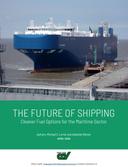
The case for adopting lower-carbon alternative maritime shipping fuels is strong and getting stronger, according to a report released today by the NGO Energy Vision: The Future of Shipping: Cleaner Fuel Options for the Maritime Sector.

The American Biofuels Maritime Initiative, which includes members representing the ethanol and biogas industries, on April 23 sent a letter to U.S. Secretary of State Marco Rubio calling for strong U.S. leadership in IMO negotiations.
The global maritime industry's transition away from heavy fuel oil is no longer a question of if but of when — and with what fuels. The U.S. biofuels industry is exceptionally well-positioned to serve this transition in the near to medium term.
The U.S. government is advocating against the adoption of the UN International Maritime Organization’s proposed Net Zero Framework, stating it “would have dire economic consequences for the shipping industry, energy producers, and global consumers.”
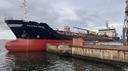
New Danish data, collected during real-world sailing, documents significant climate benefits from biofuel for the shipping industry. The findings have been submitted to the International Maritime Organization.

TOKYO-Mitsui O.S.K. Lines Ltd. has announced that MOL, China's largest fuel supplier SINOPEC Zhejiang Zhoushan Petroleum Co. Ltd., and Marubeni Corp. have signed an MOU for the establishment of a long-term supply system for marine biodiesel fuel.

DHL Global Forwarding and CMA CGM have taken a significant step toward decarbonizing global container transport. The two companies have agreed to jointly use 8,990 metric tons of UCOME second-generation biofuel.

Kanematsu Corp. has begun supplying FAME-blended biofuel for international ocean-going vessels together with Idemitsu Kosan Co. Ltd. and Kanematsu Yuso Co. Ltd., a Kanematsu group company.

As global and domestic policies take shape, a clearer route to maritime decarbonization is emerging, and biodiesel and renewable diesel are well-suited to help propel the transition.
New initiative promotes US biofuels for maritime market
By American Biogas Council and the Renewable Fuels Association,
December 11, 2025
The American Biofuels Maritime Initiative, a unified group of bioenergy stakeholders co-chaired by the American Biogas Council and the Renewable Fuels Association, announced its official launch on Dec. 11

World Fuel Services has announced Norwegian Cruise Line Holdings carried out one of the first commercial biofuel bunkerings for a cruise vessel in Greece, with Norwegian Viva receiving a waste-based marine fuel blend in Piraeus.

The European Commission on Nov. 5 unveiled its Sustainable Transport Investment Plan, an initiative that aims to rapidly accelerate the energy transition in aviation and marine sectors, including through the use of SAF and marine biofuels.
Advertisement

@ Copyright 2026 - BBI International - All rights reserved.