

Study suggests more cost-efficient, carbon friendly method for SAF production
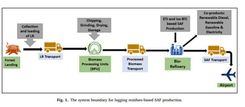

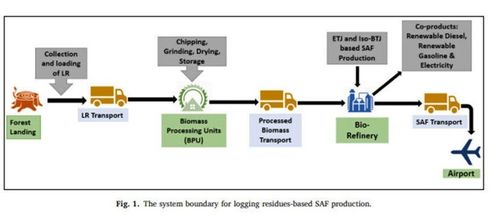
This flow chart depicts sustainable aviation fuel production, beginning with collecting logging residue, processing, and transporting the fuel to the airport. (Graphic first published in Elsevier) / SOURCE: University of Georgia
August 6, 2024
BY University of Georgia
Advertisement
Advertisement
Related Stories
XCF Global Inc. on July 23 announced that it has entered into a joint commercialization and development agreement with Continual Renewable Ventures Pty Ltd and New Rise Australia Pty Ltd. for a proposed biorefinery project in Australia.

The USDA is taking steps to speed up progress in plant science by calling on universities and stakeholders to help build new AI tools that can translate the huge amount of germplasm data the agency collects.

The Wildfire Reduction Market Expansion Act of 2026 was introduced in both the House and the Senate on July 22. The bill aims to expand the RFS’s definition of renewable biomass to include additional low value woody materials.

The U.K. government on July 23 announced plans to broaden eligibility criteria for sustainable aviation fuel (SAF) financing and released updated statistics on the volume of fuel used to meet the country’s SAF mandate last year.
Sustainable aviation fuel (SAF) could become a major driver of Canada's industrial and economic growth, according to a macroeconomic study conducted by Airbus and ICF, unveiled at the Farnborough International Airshow.
Upcoming Events

@ Copyright 2026 - BBI International - All rights reserved.