


The U.S. EPA on Aug. 25 filed a motion with the U.S. Court of Appeals for the D.C. Circuit asking the court to remand, without vacatur, 31 SREs approved by the agency for RFS compliance year 2018 under the Trump administration in 2019.

U.S. fuel ethanol production fell by 3 percent the week ending Aug. 27, according to data released by the U.S. Energy Information Administration on Sept. 1. Weekly ending stocks of fuel ethanol were down nearly 1 percent.

Despite recent legal setbacks, ACE is confident E15 will continue to be sold. It's been 10 years since the U.S. EPA first approved a waiver allowing the fuel blend, and the oil industry has been fighting against the availability of E15 ever since.

Velocys has secured a grant from the U.K. Department for Transport under the Green Fuels, Green Skies competitionfor up to £2.4 million, of which £1.2 million is subject to progress by the DfT in developing policy support for SAF.

The U.S. EPA on Aug. 25 filed a motion with the U.S. Court of Appeals for the D.C. Circuit asking the court to remand, without vacatur, 31 SREs approved by the agency for RFS compliance year 2018 under the Trump administration in 2019.

The Renewable Fuels Association has welcomed Chase Nedrow industries as an associate member. Chase Nedrow was founded in 1980 to specialize in the design and manufacture of precast refractory products.

The IRFA Aug. 27 issued open letters to Sens. Bernie Sanders and Ted Cruz. The letter to Sanders urges him to rethink his support for the Zero-Emission Vehicles Act, while the letter to Cruz asks him to revisit his stance on ethanol and the RFS.
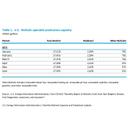
U.S. biofuel production capacity was down in June, falling to 20.732 billion gallons per year, down from 20.792 billion gallons per year in May. Total feedstock consumption was at 26.166 billion pounds in June, down from 26.768 billion pounds in May.

Natural disasters and other factors often remind us how fragile our fuel supply is. For that reason, RFA is encouraging the U.S. EPA to allow more flexibility when it comes to fuel options and the myriad regulations fuel retailers face.

Zenith Energy, a global operator of independent liquid storage terminals, announced on Aug. 27 a nearly three-fold increase in the amount of low-carbon, renewable diesel to be handled and stored at the Portland facility.

Darling Ingredients Inc. on Aug. 29 announced that the Diamond Green Diesel facility was shutdown in a safe and controlled manner in advance of Hurricane Ida's landfall. The 290 MMgy renewable diesel plant is located in Norco, Louisiana.

Velocys announced on Aug. 31 that its collaboration partner, Toyo Engineering Corp., is starting the advanced engineering and design phase of a commercial scale biorefinery in Japan to produce sustainable aviation fuel (SAF).

The American Coalition for Ethanol honored a select group of advocates in the past and present for their contributions to the ethanol industry during its 34th annual conference this month in Minneapolis.

ACE unveiled a vehicle demonstration project at its conference in August showing low to net-zero-carbon vehicles powered by ethanol already have cleaner lifecycle GHG emissions than plug-in electrics.
With Hurricane Ida impacting the nation's liquid fuel supply and distribution, the Renewable Fuels Association is uring the U.S. EPA to take two quick and simple steps that can extend fuel supplies and reduce price spikes expected at the fuel pump.

The U.S. EPA on Aug. 26 delivered a proposed rule to set annual volume and percentage standards under the RFS to the White House Office of Management and Budget. OMB review marks a final step before a proposed rule is released for public comment.

The U.S. Department of Commerce's International Trade Administration on Aug. 30 announced it is seeking public comments to help inform development of its U.S. Clean Technologies Export Competitiveness Strategy.

The USDA predicts fiscal year (FY) 2021 ethanol exports will be at $2.2 billion, down $60 million when compared to FY 2020. Moving into FY 2022, however, U.S. ethanol exports are expected to reach $2.4 billion, up $200 million from FY 2021.

International-Matex Tank Terminals LLC has announced it will build additional tanks, pipeline, and dock infrastructure at its Geismar, Louisiana marine terminal to handle renewable feedstocks and renewable products.

One of the five trucks used in last year's cooperative B100 pilot program will be on display at the 2021 Farm Progress Show in Illinois. The pilot was designed to demonstrate the feasibility of technology allowing diesel vehicles to operate on B100.

The U.S. Department of Commerce's International Trade Administration on Aug. 30 announced it is seeking public comments to help inform development of its U.S. Clean Technologies Export Competitiveness Strategy.

The U.S. EPA on Aug. 26 delivered a proposed rule to set annual volume and percentage standards under the RFS to the White House Office of Management and Budget. OMB review marks a final step before a proposed rule is released for public comment.

Ethanol Producer Magazine Editor Tom Bryan reflects on the industry's current policy challenges and recaps the articles in the September issue, including a review of the 2021 FEW in Des Moines, Iowa, a report on coproducts revenue rising, and more.

New benchmarking information points strongly toward a growing percentage of overall plant income streaming from ethanol's ancillary outputs. Data from 65 participating facilities show revenue from coproducts averaged 27% of total plant revenue in Q1.

Ethanol industry announcements from the September issue of Ethanol Producer Magazine, including USGC's newly elected chairman, CHS' E15 terminal expansion, Gevo's resumption of isobutanol production, and Tharaldson's adoption of high-protein tech.

EU policymakers must understand that unleashing the true potential of crop-based ethanol and creating a policy environment that can spark investment in advanced ethanol are must-have components of any realistic roadmap to carbon-neutrality.

Ethanol's GHG reduction benefits could help New Zealand lower emissions by 30 percent by 2030, reaching net zero by 2050, the U.S. Grains Council and industry partners told that country's policymakers in comments submitted last month.

The USDA recently released its Grain Crushings and Co-Products Production report for August, reporting that corn use for fuel ethanol in June was down from the previous month, but up significantly from June 2020.

Rep. Cheri Bustos, D-Ill., on Aug. 24 introduced the Next Generation Fuels Act of 2021, a bill that, in part, aims to establish a high-octane, low-carbon fuel standard. Bustos introduced similar legislation in September 2020.

Imperial is moving forward with plans to construct a world-class renewable diesel complex at its Strathcona refinery near Edmonton, Alberta. This new complex is expected to produce more than 1 billion liters per year (264 MMgy) of renewable diesel.
Advertisement

@ Copyright 2026 - BBI International - All rights reserved.