


Peninsula has expanded its strategic infrastructure at the Port of Rotterdam with the opening of a new storage and blending facility at Chane Terminal. The new setup allows for the blending of any biofuel grade (HSFO/VLSFO), from B5 to B100.

The U.S. exported 35,422.9 metric tons of biodiesel and biodiesel blends of B30 and greater in August, according to data released by the USDA Foreign Agricultural Service on Aug. 19. Biodiesel imports were at 200.5 metric tons for the month.

Brazil’s Ministry of Mines and Energy on Oct. 29 approved the creation of a new subcommittee that will be responsible for coordinating studies and proposing measures aimed at enabling higher blends of biodiesel and ethanol.

The U.S. EIA maintained its forecasts for 2026 renewable diesel and biodiesel production in its latest Short-Term Energy Outlook, released Nov. 12. The 2026 outlook for “other” biofuel production, which includes SAF, was reduced.

Clean Fuels Alliance America on Oct. 22 wrote U.S. Trade Representative Jamieson Greer, asking him to close a loophole in the administration’s Reciprocal Tariff regime that exempts diesel and renewable diesel from reciprocal tariffs.

The National Farmer Union is urging the White House and congressional leadership to dedicate resources toward expanding use of ethanol, biodiesel and SAF as part of any effort to provide assistance to struggling U.S. agricultural producers.

The United Nations’ International Maritime Organization on Oct. 17 announced it would delay a vote on its proposed Net Zero Framework for one year. In the interim, UN member states will continue to work towards consensus on the framework.

The Minnesota Soybean Growers Association recently celebrated the 20th anniversary of the state’s B2 biodiesel law. The law, implemented in 2005, made Minnesota the first state in the nation to require biodiesel blends.

The International Maritime Organization’s Net-Zero Framework is expected to accelerate demand for biofuels. By 2030, biofuel demand for maritime use could grow by up to 25 million metric tons; one-third of global demand.
The U.S. EIA maintained its forecasts for 2025 and 2026 renewable diesel and biodiesel production in its latest Short-Term Energy Outlook, released Oct. 7. The production outlook for “other” biofuels, which includes SAF, was also unchanged.

Advanced Biofuels Canada on Sept. 22 released the 10th annual Navius Research Biofuels in Canada report, the national report on Canada’s renewable and low-carbon fuel markets that shows biofuels have reached record use in Canada.

The New Mexico Environmental Improvement Board on Sept. 22 kicked off a public hearing to gather public input on a proposed rule to implement the state’s Clean Transportation Fuel Program. The hearing could continue through November.
Clean Fuels Alliance America on Sept. 10 thanked Sens. Pete Ricketts, R-Neb., and Shelley Moore Capito, R-W.V., for examining the Renewable Fuels for Ocean-Going Vessels Act in a Senate Environment and Public Works Committee hearing.

The U.S. EIA reduced its outlook for 2025 biodiesel and renewable diesel production in its latest Short-Term Energy Outlook, released Sept. 9. The 2026 production outlook for other biofuels, which includes SAF, was revised up.
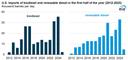
U.S. imports of biodiesel and renewable diesel significantly decreased in the first half of 2025 compared with the same period in previous years. This decline is primarily due to the loss of tax credits for imported biofuels, according to the U.S. EIA.
The U.S. exported 43,068.9 metric tons of biodiesel and biodiesel blends of B30 and greater in July, according to data released by the USDA Foreign Agricultural Service on Sept. 4. Imports of biodiesel fell to 74.7 metric tons for the month.
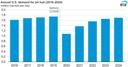
Five years after the COVID-19 national emergency was declared, gasoline demand, distillate demand, and jet fuel demand all remain less than pre-pandemic averages, according to the U.S. Energy Information Administration.
The U.K. Trade Remedies Authority on Aug. 22 announced the conclusion of its anti-dumping investigation into biodiesel imports from China and proposed to introduce anti-dumping duties on Chinese biodiesel imports.

Greenergy, a leading European producer of biodiesel from waste, announces a 10-year extension to its lease with the Port of Amsterdam, reinforcing its long-term commitment to biofuel production in the Netherlands.
World’s largest International Fuel Ethanol Workshop & Expo announces 2026 dates

By BBI International
August 18, 2025
Ethanol Producer Magazine has announced the 42th annual International Fuel Ethanol Workshop & Expo (FEW) will take place on June 2-4, 2026, at the America’s Center in St. Louis, Missouri.
The U.S. exported 35,953.6 metric tons biodiesel and biodiesel blends of B30 or greater, according to data released by the USDA Foreign Agricultural Service on Aug. 5. Biodiesel imports were at 2,148.9 metric tons for the month.

The European Commission on July 18 announced its investigation into biodiesel imports from China is now complete and did not confirm the existence of fraud. The commission will take action, however, to address some systemic weaknesses it identified.
The U.S. exported 31,160.5 metric tons of biodiesel and biodiesel blends of B30 and greater in May, according to data released by the USDA Foreign Agricultural Service on July 3. Biodiesel imports were 2,226.2 metric tons for the month.

CARB on June 27 announced amendments to the state’s LCFS regulations will take effect beginning on July 1. The amended regulations were approved by the agency in November 2024, but implementation was delayed due to regulatory clarity issues.
Legislation introduced in the California Senate on June 23 aims to cap the price of Low Carbon Fuel Standard credits as part of a larger effort to overhaul the state’s fuel regulations and mitigate rising gas prices.
The government of Brazil on June 25 announced it will increase the mandatory blend of ethanol in gasoline from 27% to 30% and the mandatory blend of biodiesel in diesel from 14% to 15%, effective Aug. 1.
The U.S. EIA reduced its 2025 and 2026 production forecasts for a category of biofuels that includes SAF in its latest Short-Term Energy Outlook, released June 10. The forecast for 2025 renewable diesel production was also revised down.
The U.S. exported 21,545.9 metric tons of biodiesel and biodiesel blends of B30 and greater in April, according to data released by the USDA Foreign Agricultural Service on June 4. U.S. imports of biodiesel were at 4,417.3 metric tons for the month.

The Iowa Biodiesel Board and Iowa Soybean Association joined Pilot Travel Centers, PepsiCo and Optimus Technologies to celebrate the launch of a new B99 biodiesel pump for fleets at Pilot’s Des Moines travel center.

Industry experts weigh in on the status of Canada’s renewable fuels industry and the impact of government policy and regulation.
Advertisement

@ Copyright 2026 - BBI International - All rights reserved.