


On March 17, six trade associations wrote a letter to President Trump urging him to unleash U.S. biodiesel and renewable diesel production to bolster America’s energy security during the conflict with Iran.

Nearly two dozen federal lawmakers are urging Treasury to ensure its final rule to implement the 45Z clean fuel production credit recognizes the ability of a wide array of on-farm practices to produce lower-carbon biofuel feedstocks.
On March 11, the Justice Department’s Environment and Natural Resources Division announced a settlement with Chevron U.S.A. Inc. for violations of the Clean Air Act’s Renewable Fuel Standard program.

U.S. EPA Administrator Lee Zeldin on March 9 announced the selection of new members to the Clean Air Scientific Advisory Committee. The newly appointed CASAC will consist of a chair and six new members.

Fuel retailers are calling on the Senate Committee on Agriculture, Nutrition and Forestry to reinstate the Biodiesel Blenders’ Tax Credit, noting that the transition to the 45Z clean fuel production credit has stifled the biodiesel market.

The House Agriculture Committee on March 5 voted 34 to 17 to advance the Farm, Food and National Security Act of 2026, commonly known as the 2026 Farm Bill. The vote followed a two-day markup session that spanned roughly 25 hours.

SAF Magazine, in collaboration with the Commercial Aviation Alternative Fuels Initiative, has announced the 2026 North American SAF Conference & Expo will take place Aug. 25-27, in Tacoma, Washington, at the Greater Tacoma Convention Center.

EcoCeres Inc. on Feb.27 urged European policymakers and aviation stakeholders to keep the EU SAF market open and competitive, cautioning that potential trade defense measures on imported SAF could undermine EU climate objectives

The California Legislative Analyst’s Office, the state legislature’s nonpartisan fiscal and policy advisor, on Feb. 24 recommended state lawmakers do not move forward with California Gov. Gavin Newsom’s proposal to create a SAF tax credit.
The National Oilseed Processors Association, the American Soybean Association, and Clean Fuels Alliance America on Feb. 26 commended the U.S. EPA for transmitting its final 2026-2027 RFS rule to the OMB for interagency review.
U.S. EPA Assistant Administrator for Air and Radiation Aaron Szabo on Feb. 25 announced the agency has submitted the long-awaited rule to set 2026 and 2027 RFS RVOs to the White House Office of Management and Budget.

The USDA on Feb. 23 opened enrollment for its Farmer Bridge Assistance program, which is providing $11 billion in one-time bridge payments to row crop producers in response to temporary trade market disruptions and increased production costs.

The U.S. EPA on Feb. 19 announced plans to revamp its Clean School Bus program to focus on a wider range of alternative fuels, including renewable natural gas (RNG), biodiesel, renewable diesel and E85.
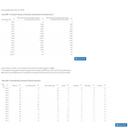
The U.S. EPA on Feb. 19 released data showing five additional SRE petitions have been filed under the RFS during the past month. A total of 31 SRE petitions are currently pending, up from 26 that were pending as of mid-January.

Biodiesel advocates from across Iowa gathered at the state capitol on Feb. 19 for the Iowa Biodiesel Day on the Hill, urging lawmakers to extend and increase the state’s Biodiesel Production Tax Credit.
The House Committee on Agriculture on Feb. 13 released a draft Farm Bill that includes provisions that aim to expand the use of biochar and encourage growth and innovation in the biofuel, bioproducts and bioenergy industries.
The U.S. EPA on Feb. 12 published a final rule rescinding the agency’s 2009 Greenhouse Gas Endangerment Finding, which formed the legal basis for the EPA’s GHG regulations, and repealed all subsequent GHG emission standards for vehicles.

The DOE on Feb. 3 announced the chair and members of the newly established Office of Science Advisory Committee, a unified advisory body that will provide independent advice on complex scientific and technical challenges.
Renewable fuel producers are ready, willing and able; need policy certainty and new tools to unlock next wave of growth

By Iowa Renewable Fuels Association
February 05, 2026
Iowa Renewable Fuels Association Executive Director Monte Shaw told attendees at the Iowa Renewable Fuels Summit that America’s ethanol and biodiesel producers are “ready, willing, and able” to meet demand.

Sen. Jerry Moran, R-Kan., on Feb. 2 introduced the bipartisan Securing America’s Fuels (SAF) Act. The bill aims to reinstate the 45Z clean fuel production credit premium for sustainable aviation fuel (SAF) and extend the 45Z credit through 2033.

The U.S. Department of Treasury and IRS on Feb. 3 released proposed regulations for the 45Z clean fuel production tax credit, as updated by the One Big Beautiful Bill in mid-2025. A public comment period is scheduled to be open for 60 days.

Arva on Jan. 27 announced the expansion of its biofuels offering to support biofuel producers as they operationalize the 45Z Clean Fuel Production Credit.
President Trump held a rally in Clive, Iowa, on Jan. 27 where he told attendees that Congress is “very close” to getting year-round approval for E15. Grant Kimberley, executive director of the IBB, urges the president to also support biodiesel.

The U.K. Department of Transport on Jan. 20 announced plans to offer up to £43 million ($59.53 million) to support green aviation projects, including those focused on clean fuels and zero-emission aircraft.

The White House Office of Management and Budget on Jan. 23 concluded its review of a proposed rule to implement guidance for the 45Z clean fuel production credit, according to information posted to the agency’s website.
President Donald Trump on Jan. 23 signed an appropriations bill that includes language on biomass energy and sustainability. Explanatory statements published by Congress regarding the legislation included guidance on SREs and SAF.

Iowa’s biodiesel plants produced 244 million gallons in 2025, down 31% from 353 million gallons in 2024. Only eight facilities reported production in 2025, with several running off and on, well under capacity.
Clean Fuels Alliance America on Jan. 26 sent a letter to President Donald Trump highlighting the biodiesel, renewable diesel and SAF industry’s contribution to U.S. energy security and rural prosperity.

The New Mexico Environmental Improvement Board on Jan. 22 unanimously adopted regulations implementing a Clean Transportation Fuel Program, making New Mexico the fourth U.S. state to adopt a clean fuel standard.
Clean Fuels Conference 2026: Unity drives growth, progress
January 22, 2026
The foundation is strong for expansion of biodiesel, renewable diesel and SAF in the U.S., but to build on the growth of recent years, producers and stakeholders must remain united, according to Clean Fuels Alliance America CEO Donnell Rehagen.
Advertisement

@ Copyright 2026 - BBI International - All rights reserved.